Sun may have stolen mysterious ninth planet, scientists say
Sunday, 5 June 2016
Posted by Muhammad Rachman Afandi Esa
Tag :
News Internasional
(CNN)We may be a step closer to figuring out the origins of Planet Nine, a mysterious world lurking at the edge of our solar system.
For months, headlines have been buzzing about the possibility that our solar system is harboring a rogue planet that has a mass 10 times that of Earth, and scientists have recently noticed it.
If our solar system really does have another planet, it didn't just come out of nowhere, scientists said.
Astronomers believe if such a world does exist, it was pulled into our solar system by the sun, according to a new report in the journal Monthly Notices of the Royal Astronomical Society.
Scientists believe Planet Nine is really an exoplanet, a world that orbits a star outside a solar system.
If the scientists are right, that would make Planet Nine the first exoplanet to be discovered in our solar system, according to astronomers at Lund University in Sweden. They came to this exoplanet theory based on computer models. It's likely that while our sun was still young, about 4.5 billion years ago, it stole Planet Nine from another star — classic interstellar drama.
"It is almost ironic that while astronomers often find exoplanets hundreds of light years away in other solar systems, there's probably one hiding in our own backyard," Alexander Mustill, astronomer at Lund University, said in a statement.
Photos: Weird and wonderful exoplanets
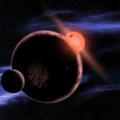
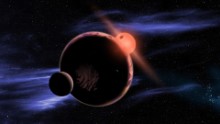
Red dwarfed – This artist's conception shows a hypothetical planet with two moons orbiting in the habitable zone of a red dwarf star. The majority of the sun's closest stellar neighbors are red dwarfs.
Hide Caption
6 of 10

Photos: Weird and wonderful exoplanets
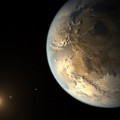
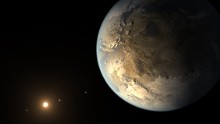
First second-Earth – Kepler-186f was the first validated Earth-sized planet to be found orbiting a distant star in the habitable zone. This zone a range of distance from a star where liquid water might pool on the planet's surface.
Hide Caption
7 of 10

Photos: Weird and wonderful exoplanets
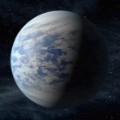
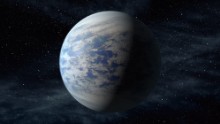
Super Venus – Kepler-69c is a super-Earth-size planet similar to Venus. The planet is found in the habitable zone of a star like our sun, located approximately 2,700 light years from Earth in the constellation Cygnus.
Hide Caption
8 of 10

Photos: Weird and wonderful exoplanets
Tiny worlds – The Kepler-444 system formed when the Milky Way was just two billion years old. The tightly packed system is home to five planets that range in size, the smallest is comparable to the size of Mercury and the largest to Venus, orbiting their sun in less than 10 days.
Hide Caption
9 of 10

Photos: Weird and wonderful exoplanets
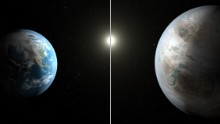
Our older cousin – This artistic concept image compares Earth (left) to Kepler-452b, which is about 60 percent larger. Both planets orbit a G2-type star of about the same temperature; however, the star hosting Kepler-452b is 6 billion years old -- 1.5 billion years older than our sun.
Hide Caption
10 of 10

Photos: Weird and wonderful exoplanets
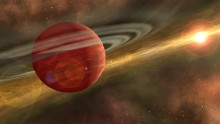
Dwarfing even Jupiter – HD-106906b is a gaseous planet 11 times more massive than Jupiter. The planet is believed to have formed in the center of its solar system, before being sent flying out to the edges of the region by a violent gravitational event.
Hide Caption
1 of 10

Photos: Weird and wonderful exoplanets
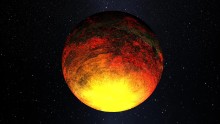
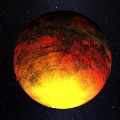
Scorched world – Kepler-10b orbits at a distance more than 20 times closer to its star than Mercury is to our own sun. Daytime temperatures exceed 1,300 degrees Celsius (2,500 degrees Fahrenheit), which is hotter than lava flows on Earth.
Hide Caption
2 of 10

Photos: Weird and wonderful exoplanets
Real-life Tatooine – This Jupiter-like planet in the HD-188753 system 149 light-years from Earth has three suns. The main star is similar in mass to our own Sun. The system has been compared to Luke Skywalker's home planet Tatooine in "Star Wars."
Hide Caption
3 of 10

Photos: Weird and wonderful exoplanets
Longest year in the universe – Kepler-421b is a Uranus-sized transiting exoplanet with the longest known year, as it circles its star once every 704 days. The planet orbits an orange, K-type star that is cooler and dimmer than our Sun and is located about 1,000 light-years from Earth in the constellation Lyra.
Hide Caption
4 of 10

Photos: Weird and wonderful exoplanets
Crowded neighborhood – Astronomers discovered two planets less than three times the size of Earth orbiting sun-like stars in a crowded stellar cluster approximately 3,000 light-years from Earth in the constellation Cygnus.
Hide Caption
5 of 10

Photos: Weird and wonderful exoplanets
Red dwarfed – This artist's conception shows a hypothetical planet with two moons orbiting in the habitable zone of a red dwarf star. The majority of the sun's closest stellar neighbors are red dwarfs.
Hide Caption
6 of 10

Photos: Weird and wonderful exoplanets
First second-Earth – Kepler-186f was the first validated Earth-sized planet to be found orbiting a distant star in the habitable zone. This zone a range of distance from a star where liquid water might pool on the planet's surface.
Hide Caption
7 of 10

Photos: Weird and wonderful exoplanets
Super Venus – Kepler-69c is a super-Earth-size planet similar to Venus. The planet is found in the habitable zone of a star like our sun, located approximately 2,700 light years from Earth in the constellation Cygnus.
Hide Caption
8 of 10

Photos: Weird and wonderful exoplanets
Tiny worlds – The Kepler-444 system formed when the Milky Way was just two billion years old. The tightly packed system is home to five planets that range in size, the smallest is comparable to the size of Mercury and the largest to Venus, orbiting their sun in less than 10 days.
Hide Caption
9 of 10

Photos: Weird and wonderful exoplanets
Our older cousin – This artistic concept image compares Earth (left) to Kepler-452b, which is about 60 percent larger. Both planets orbit a G2-type star of about the same temperature; however, the star hosting Kepler-452b is 6 billion years old -- 1.5 billion years older than our sun.
Hide Caption
10 of 10

Photos: Weird and wonderful exoplanets
Dwarfing even Jupiter – HD-106906b is a gaseous planet 11 times more massive than Jupiter. The planet is believed to have formed in the center of its solar system, before being sent flying out to the edges of the region by a violent gravitational event.
Hide Caption
1 of 10

Photos: Weird and wonderful exoplanets
Scorched world – Kepler-10b orbits at a distance more than 20 times closer to its star than Mercury is to our own sun. Daytime temperatures exceed 1,300 degrees Celsius (2,500 degrees Fahrenheit), which is hotter than lava flows on Earth.
Hide Caption
2 of 10

Photos: Weird and wonderful exoplanets
Real-life Tatooine – This Jupiter-like planet in the HD-188753 system 149 light-years from Earth has three suns. The main star is similar in mass to our own Sun. The system has been compared to Luke Skywalker's home planet Tatooine in "Star Wars."
Hide Caption
3 of 10

Photos: Weird and wonderful exoplanets
Longest year in the universe – Kepler-421b is a Uranus-sized transiting exoplanet with the longest known year, as it circles its star once every 704 days. The planet orbits an orange, K-type star that is cooler and dimmer than our Sun and is located about 1,000 light-years from Earth in the constellation Lyra.
Hide Caption
4 of 10

Photos: Weird and wonderful exoplanets
Crowded neighborhood – Astronomers discovered two planets less than three times the size of Earth orbiting sun-like stars in a crowded stellar cluster approximately 3,000 light-years from Earth in the constellation Cygnus.
Hide Caption
5 of 10
Since the launch of NASA's planet-hunting space probe Kepler, there have been more than 3,000 exoplanets confirmed in our universe. Exoplanets are important for our search in finding habitable planets because they could possibly harbor life.
Stars are born in clusters, and during that time if they pass by one another they can "steal" a planet or two. Astronomers believe that was probably the case with Planet Nine.
"Planet [Nine] may very well have been 'shoved' by other planets, and when it ended up in an orbit that was too wide around its own star, our sun may have taken the opportunity to steal and capture Planet Nine from its original star," Mustill said.
It's an extraordinary hypothesis, except there's still debate over whether such a world even exists.
"While the existence of Planet [Nine] remains unproven, we consider capture from one of the sun's young brethren a plausible route to explain such an object's orbit," the report stated.
Researchers at the California Institute of Technology announced they found evidence that Planet Nine is lying in our outer solar system, and that the world is a true planet, not a dwarf planet like Pluto.
Supposedly, Planet Nine orbits 20 times farther from the sun than Neptune, which means it may take the world 10,000 to 20,000 Earth years to make a full orbit around our sun.
More research is needed, Mustill said. But if Planet Nine really exists, that means we may be able to visit it one day.
"This is the only exoplanet that we, realistically, would be able to reach using a space probe," he said.
(CNN)We may be a step closer to figuring out the origins of Planet Nine, a mysterious world lurking at the edge of our solar system.
If the scientists are right, that would make Planet Nine the first exoplanet to be discovered in our solar system, according to astronomers at Lund University in Sweden. They came to this exoplanet theory based on computer models. It's likely that while our sun was still young, about 4.5 billion years ago, it stole Planet Nine from another star — classic interstellar drama.
"It is almost ironic that while astronomers often find exoplanets hundreds of light years away in other solar systems, there's probably one hiding in our own backyard," Alexander Mustill, astronomer at Lund University, said in a statement.
Photos: Weird and wonderful exoplanets
Red dwarfed – This artist's conception shows a hypothetical planet with two moons orbiting in the habitable zone of a red dwarf star. The majority of the sun's closest stellar neighbors are red dwarfs.
Hide Caption
6 of 10

Photos: Weird and wonderful exoplanets
First second-Earth – Kepler-186f was the first validated Earth-sized planet to be found orbiting a distant star in the habitable zone. This zone a range of distance from a star where liquid water might pool on the planet's surface.
Hide Caption
7 of 10

Photos: Weird and wonderful exoplanets
Super Venus – Kepler-69c is a super-Earth-size planet similar to Venus. The planet is found in the habitable zone of a star like our sun, located approximately 2,700 light years from Earth in the constellation Cygnus.
Hide Caption
8 of 10

Photos: Weird and wonderful exoplanets
Tiny worlds – The Kepler-444 system formed when the Milky Way was just two billion years old. The tightly packed system is home to five planets that range in size, the smallest is comparable to the size of Mercury and the largest to Venus, orbiting their sun in less than 10 days.
Hide Caption
9 of 10

Photos: Weird and wonderful exoplanets
Our older cousin – This artistic concept image compares Earth (left) to Kepler-452b, which is about 60 percent larger. Both planets orbit a G2-type star of about the same temperature; however, the star hosting Kepler-452b is 6 billion years old -- 1.5 billion years older than our sun.
Hide Caption
10 of 10

Photos: Weird and wonderful exoplanets
Dwarfing even Jupiter – HD-106906b is a gaseous planet 11 times more massive than Jupiter. The planet is believed to have formed in the center of its solar system, before being sent flying out to the edges of the region by a violent gravitational event.
Hide Caption
1 of 10

Photos: Weird and wonderful exoplanets
Scorched world – Kepler-10b orbits at a distance more than 20 times closer to its star than Mercury is to our own sun. Daytime temperatures exceed 1,300 degrees Celsius (2,500 degrees Fahrenheit), which is hotter than lava flows on Earth.
Hide Caption
2 of 10

Photos: Weird and wonderful exoplanets
Real-life Tatooine – This Jupiter-like planet in the HD-188753 system 149 light-years from Earth has three suns. The main star is similar in mass to our own Sun. The system has been compared to Luke Skywalker's home planet Tatooine in "Star Wars."
Hide Caption
3 of 10

Photos: Weird and wonderful exoplanets
Longest year in the universe – Kepler-421b is a Uranus-sized transiting exoplanet with the longest known year, as it circles its star once every 704 days. The planet orbits an orange, K-type star that is cooler and dimmer than our Sun and is located about 1,000 light-years from Earth in the constellation Lyra.
Hide Caption
4 of 10

Photos: Weird and wonderful exoplanets
Crowded neighborhood – Astronomers discovered two planets less than three times the size of Earth orbiting sun-like stars in a crowded stellar cluster approximately 3,000 light-years from Earth in the constellation Cygnus.
Hide Caption
5 of 10

Photos: Weird and wonderful exoplanets
Red dwarfed – This artist's conception shows a hypothetical planet with two moons orbiting in the habitable zone of a red dwarf star. The majority of the sun's closest stellar neighbors are red dwarfs.
Hide Caption
6 of 10

Photos: Weird and wonderful exoplanets
First second-Earth – Kepler-186f was the first validated Earth-sized planet to be found orbiting a distant star in the habitable zone. This zone a range of distance from a star where liquid water might pool on the planet's surface.
Hide Caption
7 of 10

Photos: Weird and wonderful exoplanets
Super Venus – Kepler-69c is a super-Earth-size planet similar to Venus. The planet is found in the habitable zone of a star like our sun, located approximately 2,700 light years from Earth in the constellation Cygnus.
Hide Caption
8 of 10

Photos: Weird and wonderful exoplanets
Tiny worlds – The Kepler-444 system formed when the Milky Way was just two billion years old. The tightly packed system is home to five planets that range in size, the smallest is comparable to the size of Mercury and the largest to Venus, orbiting their sun in less than 10 days.
Hide Caption
9 of 10

Photos: Weird and wonderful exoplanets
Our older cousin – This artistic concept image compares Earth (left) to Kepler-452b, which is about 60 percent larger. Both planets orbit a G2-type star of about the same temperature; however, the star hosting Kepler-452b is 6 billion years old -- 1.5 billion years older than our sun.
Hide Caption
10 of 10

Photos: Weird and wonderful exoplanets
Dwarfing even Jupiter – HD-106906b is a gaseous planet 11 times more massive than Jupiter. The planet is believed to have formed in the center of its solar system, before being sent flying out to the edges of the region by a violent gravitational event.
Hide Caption
1 of 10

Photos: Weird and wonderful exoplanets
Scorched world – Kepler-10b orbits at a distance more than 20 times closer to its star than Mercury is to our own sun. Daytime temperatures exceed 1,300 degrees Celsius (2,500 degrees Fahrenheit), which is hotter than lava flows on Earth.
Hide Caption
2 of 10

Photos: Weird and wonderful exoplanets
Real-life Tatooine – This Jupiter-like planet in the HD-188753 system 149 light-years from Earth has three suns. The main star is similar in mass to our own Sun. The system has been compared to Luke Skywalker's home planet Tatooine in "Star Wars."
Hide Caption
3 of 10

Photos: Weird and wonderful exoplanets
Longest year in the universe – Kepler-421b is a Uranus-sized transiting exoplanet with the longest known year, as it circles its star once every 704 days. The planet orbits an orange, K-type star that is cooler and dimmer than our Sun and is located about 1,000 light-years from Earth in the constellation Lyra.
Hide Caption
4 of 10

Photos: Weird and wonderful exoplanets
Crowded neighborhood – Astronomers discovered two planets less than three times the size of Earth orbiting sun-like stars in a crowded stellar cluster approximately 3,000 light-years from Earth in the constellation Cygnus.
Hide Caption
5 of 10


Since the launch of NASA's planet-hunting space probe Kepler, there have been more than 3,000 exoplanets confirmed in our universe. Exoplanets are important for our search in finding habitable planets because they could possibly harbor life.
Stars are born in clusters, and during that time if they pass by one another they can "steal" a planet or two. Astronomers believe that was probably the case with Planet Nine.
"Planet [Nine] may very well have been 'shoved' by other planets, and when it ended up in an orbit that was too wide around its own star, our sun may have taken the opportunity to steal and capture Planet Nine from its original star," Mustill said.
It's an extraordinary hypothesis, except there's still debate over whether such a world even exists.
"While the existence of Planet [Nine] remains unproven, we consider capture from one of the sun's young brethren a plausible route to explain such an object's orbit," the report stated.
Researchers at the California Institute of Technology announced they found evidence that Planet Nine is lying in our outer solar system, and that the world is a true planet, not a dwarf planet like Pluto.
Supposedly, Planet Nine orbits 20 times farther from the sun than Neptune, which means it may take the world 10,000 to 20,000 Earth years to make a full orbit around our sun.
More research is needed, Mustill said. But if Planet Nine really exists, that means we may be able to visit it one day.
"This is the only exoplanet that we, realistically, would be able to reach using a space probe," he said.
Sayang Boleh, tapi Lebay Pamer Kemesraan Jangan deh!
DUNIA serasa milik berdua bagi orang jatuh cinta. Emang iya? Buktinya, 79 persen Zetizen sering ngelihat orang pacaran lagi bermesraan di tempat umum tuh. Kalau sekadar gandengan tangan sih, jomblo mungkin masih kuat. Tapi, kalau sampai rangkul-
rangkulan kayak yang dilihat 56 persen Zetizen gitu, risi nggak?
Emang sih, masa muda itu adalah masa kita pengin banget orang lain tahu bahwa kita sayang banget sama pacar. Tapi, perlu diingat bahwa Indonesia masih memegang adat ketimuran yang menjunjung tinggi kesopanan. ’’Masa remaja itu perlu sekali pendampingan. Sebab, sifat superego masih belum bisa dikendalikan,’’ jelas Dra Psi
Hamidah MSi, dosen Psikologi Universitas Airlangga.
Karena itulah, kadang banyak couple yang nggak sadar kelakuannya udah melebihi batas. Meski terasa asyik buat yang menjalani, faktanya mengumbar kemesraan yang berlebihan di tempat umum nggak memberikan value kepada orang lain. Orang lain
yang melihat justru bisa terpicu melakukan hal yang kamu lakukan. Parahnya, hal itu juga bisa memicu tindak kejahatan seksual. ’’Ini seperti narkotika lewat mata. Tentu dapat memicu rasa adiktif dan melakukan hal lebih dari itu,” ungkap Hamidah.(pew/c14/and)
Iin Mutmainnah
15 Tahun
SMA Negeri 1 Ternate
Kalo dibilang risi sih enggak. Ya sadar diri aja lah. Kan di depan umum nggak baik kalo diumbar-umbar, apalagi kalo ada anak-anak. Bahaya, nanti bakalan ditiru sama mereka. Kalau cuma sekadar pegangan tangan sih nggak apa-apa, tapi kalau pelukan dan lain-lain kayaknya nggak baik. Kalau pengalaman saya, paling nggak sengaja ngeliat orang yang lagi pacaran sambil peluk-pelukan.(*)
M Rizki Faujan Baud
18 Tahun
Universitas Khairun
Saya sih fine-fine saja, terserah mereka mau mengumbar kemesraan di depan umum atau nggak. Nggak masalah bagi saya, itu kan urusan mereka. Tapi saya nggak tau gimana pandangan orang lain mengenai hal itu. Karena saya nggak pernah melakukan aksi pamer di depan umum. Mungkin tergantung yang menyikapi aja, apakah itu dianggap berlebihan atau tidak. Yah ada baiknya jangan dipertontonkan atau diumbar-umbar tanpa memikirkan norma-norma masyarakat yang berlaku. Contohnya di Taman Nukila, kalau udah larut malam di sudut-sudut taman dipenuhi pasangan-pasangan yang lagi asyik-asyik pacaran. Yah saya cuma bisa istighfar aja, semoga cepat diberi hidayah. Hehehe… (*)
Sukmawati Hi. Andi Mamang
20 Tahun
Universitas Khairun
Saya nggak risi pas ngeliat orang bermesraan di depan umum. Yang nggak asyiknya itu, kenapa orang lain bisa mesra dan bahagia, tapi kita nggak nggak kayak gitu. Jadi baper urusannya.(*)

DUNIA serasa milik berdua bagi orang jatuh cinta. Emang iya? Buktinya, 79 persen Zetizen sering ngelihat orang pacaran lagi bermesraan di tempat umum tuh. Kalau sekadar gandengan tangan sih, jomblo mungkin masih kuat. Tapi, kalau sampai rangkul-
rangkulan kayak yang dilihat 56 persen Zetizen gitu, risi nggak?
Emang sih, masa muda itu adalah masa kita pengin banget orang lain tahu bahwa kita sayang banget sama pacar. Tapi, perlu diingat bahwa Indonesia masih memegang adat ketimuran yang menjunjung tinggi kesopanan. ’’Masa remaja itu perlu sekali pendampingan. Sebab, sifat superego masih belum bisa dikendalikan,’’ jelas Dra Psi
Hamidah MSi, dosen Psikologi Universitas Airlangga.
Karena itulah, kadang banyak couple yang nggak sadar kelakuannya udah melebihi batas. Meski terasa asyik buat yang menjalani, faktanya mengumbar kemesraan yang berlebihan di tempat umum nggak memberikan value kepada orang lain. Orang lain
yang melihat justru bisa terpicu melakukan hal yang kamu lakukan. Parahnya, hal itu juga bisa memicu tindak kejahatan seksual. ’’Ini seperti narkotika lewat mata. Tentu dapat memicu rasa adiktif dan melakukan hal lebih dari itu,” ungkap Hamidah.(pew/c14/and)
Iin Mutmainnah
15 Tahun
SMA Negeri 1 Ternate
Kalo dibilang risi sih enggak. Ya sadar diri aja lah. Kan di depan umum nggak baik kalo diumbar-umbar, apalagi kalo ada anak-anak. Bahaya, nanti bakalan ditiru sama mereka. Kalau cuma sekadar pegangan tangan sih nggak apa-apa, tapi kalau pelukan dan lain-lain kayaknya nggak baik. Kalau pengalaman saya, paling nggak sengaja ngeliat orang yang lagi pacaran sambil peluk-pelukan.(*)
M Rizki Faujan Baud
18 Tahun
Universitas Khairun
Saya sih fine-fine saja, terserah mereka mau mengumbar kemesraan di depan umum atau nggak. Nggak masalah bagi saya, itu kan urusan mereka. Tapi saya nggak tau gimana pandangan orang lain mengenai hal itu. Karena saya nggak pernah melakukan aksi pamer di depan umum. Mungkin tergantung yang menyikapi aja, apakah itu dianggap berlebihan atau tidak. Yah ada baiknya jangan dipertontonkan atau diumbar-umbar tanpa memikirkan norma-norma masyarakat yang berlaku. Contohnya di Taman Nukila, kalau udah larut malam di sudut-sudut taman dipenuhi pasangan-pasangan yang lagi asyik-asyik pacaran. Yah saya cuma bisa istighfar aja, semoga cepat diberi hidayah. Hehehe… (*)
Sukmawati Hi. Andi Mamang
20 Tahun
Universitas Khairun
Saya nggak risi pas ngeliat orang bermesraan di depan umum. Yang nggak asyiknya itu, kenapa orang lain bisa mesra dan bahagia, tapi kita nggak nggak kayak gitu. Jadi baper urusannya.(*)

![]() |
| Pedagang Sembako |
Komoditas lain seperti beras, gula, minyak goreng, daging ayam, dan telur ayam juga merangkak naik. Meskipun belum terlalu tinggi. Diantara komoditas tersebut yang kenaikannya paling tinggi dalam adalah telur ayam. Pada pertengahan Mei, harga telur ayam secara nasional itu dikisaran Rp 22.420 per kilogram. Sedangkan harga kemarin mencapai Rp 24.092. Ada kenaikan sampai Rp 1.672.
Wakil Presiden Jusuf Kalla menyebutkan bahwa harga komoditas yang belum turun itu lantaran permintaan dari masyarakat memang makin tinggi jelang Ramadan. Bila suplai barang tersebut tidak segera diimbangi, harga akan terus naik. ”Harga naik turun itukan karena supply dan demand,” ujar JK di Istana Wakil Presiden di Jalan Medan Merdeka Selatan, kemarin (3/6).
Pemerintah tentu saja tidak bisa secara langsung menentukan harga. Sebab, naik turunnya harga itu sangat bergantung pada mekanisme pasar. Termasuk misalnya dengan menentukan harga eceran tertinggi untuk komoditas utama. ”Tidak mungkin lagi mengontorl harga,” kata JK.
Di negara lain seperti Malaysia memang ada kontrol harga. Tapi, mereka memberikan subsidi yang cukup besar bagi 30 juta warganya. Kondisi itu tentu berbeda sekali dengan Indonesia yang punya 250 juta penduduk. Untuk menurunkan harga itu, satu-satunya cara adalah dengan memperbanyak stok di pasar. ”Menaikan suplai itu dengan produksi sendiri. Kalau tidak mudah (produksi, red) ya musti impor seperti daging sapi,” jelas dia.
Impor memang akan cukup dilematis pula bagi para peternak dalam negeri. Mereka tentu akan merugi kalau daging impor membanjiri pasar daging. Tapi, pemerintah juga harus memperhatikan para konsumen yang membutuhkan daging dengan harga terjangkau.
JK menyebutkan khusus untuk harga daging sebenarnya bisa saja ditekan hingga Rp 60 ribu perkilogram. Bukan Rp 80 ribu perkilogram seperti keinginan Presiden Joko Widodo. Caranya dengan membanjiri pasar daging dalam negeri dengan impor. Tapi, langkah tersebut tentu tidak dilakukan pemerintah demi memihak pada peternak. ”Di India harga daging itu Rp 50 ribu per kilogram. Kalau ditambah ongkos dan lain-lain sekitar Rp 60 ribu atau Rp 70 ribu,” ujar JK.
Harga daging yang tinggi sebenarnya juga berbahaya juga untuk kelanjutan peternakan di dalam negeri. Para peternak bisa jadi akan gelap mata. Mereka akan menyembelih sapi betina produktif. Bahkan sapi perah pun disembelih. ”Jadi menyenangkan peternak itu ada batasnya. Yaitu sampai dimana dia hanya memotong yang jantan dan jangan berlebihan,” imbuhnya.
Sementara itu, lonjakan harga sembako yang diduga tidak wajar membuat Badan Reserse Kriminal (Bareskrim) Polri turun tangan. Setelah mensurvey sejumlah lokasi dan dilakukan rapat koordinasi ada sejumlah masalah yang diprediksi menjadi biang keladi kenaikan harga sembako. Diantaranya, terhambatnya transportasi dan ketersediaan pasokan sembako yang tidak mencukupi.
Kabareskrim Irjen Ari Dono Sukmanto menerangkan, transportasi pengiriman sembako memang belum terlalu lancar. Hal itu dikarenakan berbagai sebab dan sekarang sedang dibahas cara mengatasinya. ”Kelancaran pengiriman sembako ini penting dalam penentuan harga, ini menjadi salah satu fokus,’ tuturnya.
Lalu, ketersediaan sembako saat ini juga masih menjadi problem. Dia menuturkan dalam rapat koordinasi itu diketahui masih ada stok sembako yang kurang. ”Ada rencana untuk melakukan impor, namun itu terserah kementerian,” ujarnya.
Selama ini, ada dugaan bahwa sembako banyak ditimbun untuk melonjakkan harga. Karena itu, Bareskrim telah berupaya untuk menurunkan satuan tugas khusus. Tugasnya untuk mendeteksi kemungkinan penimbunan itu. ”Kami sudah terjun ke lapangan sejak beberapa minggu yang lalu,” terangnya.
Satgas khusus tersebut akan bekerja dengan menggelar razia sembako dengan lebih intens. Sehingga, bila terjadi penimbunan, bisa dideteksi lebih awal. ”Razia lebih sering itu pasti berdampak,” ujarnya.
Bahkan, tidak hanya Bareskrim, jajaran Polda se-Indonesia juga telah diinstruksikan oleh Kapolri Jenderal Badrodin Haiti untuk turut serta menggelar razia sembako. Tentunya, bila ditemukan adanya kejanggalan, proses hukum akan diterapkan. ”kalau ada pidananya, tentu akan langsung diproses,” paparnya.
Apakah sudah ditemukan adanya penimbunan? Dia menjelaskan bahwa selama ini pihaknya terus mendeteksi adanya penimbunan. Laporan soal penimbunan juga belum muncul. ”Kita berupaya terus,” papar mantan Wakil Kabareskrim tersebut.
Dia mengklaim bahwa turunnya anggota kepolisian untuk mempelajari rantai distribusi sembako ini mulai terasa dampaknya. Salah satunya, di beberapa daerah mulai terasa harga sembako yang turun. ”dari laporan, harga beberapa sembako sudah ada yang bagus kok,” ujarnya.(jpg/kai)